As an Amazon Associate, this site earns from qualifying purchases. Learn more
Last updated: 2026-07-21
Heybike Villain Off-Road & Trail Riding Guide
The Heybike Villain wasn't built for commuting or boardwalks — it was built for dirt, mud, and hills. With 4,160W of mid-drive power, 190 N·m of torque, and suspension designed to soak up rough terrain, this electric dirt bike lives for the trail. This guide covers everything you need to know to take the Villain off-road and ride it to its full potential.
Terrain Types the Villain Handles Well
The Villain's combination of fat tires, mid-drive torque, and dual suspension makes it surprisingly versatile across a range of off-road surfaces:
- Dirt trails and fire roads: This is the Villain's bread and butter. The wide tires and low center of gravity deliver confident handling on packed and loose dirt alike.
- Gravel roads and paths: No problem. The 14-inch front and 12-inch rear fat tires roll over loose gravel without the nervous steering you'd get on skinny bicycle tires.
- Sand: The fat tires provide enough floatation to ride through shallow sand sections. Momentum is your friend here — keep the throttle steady and avoid sharp turns.
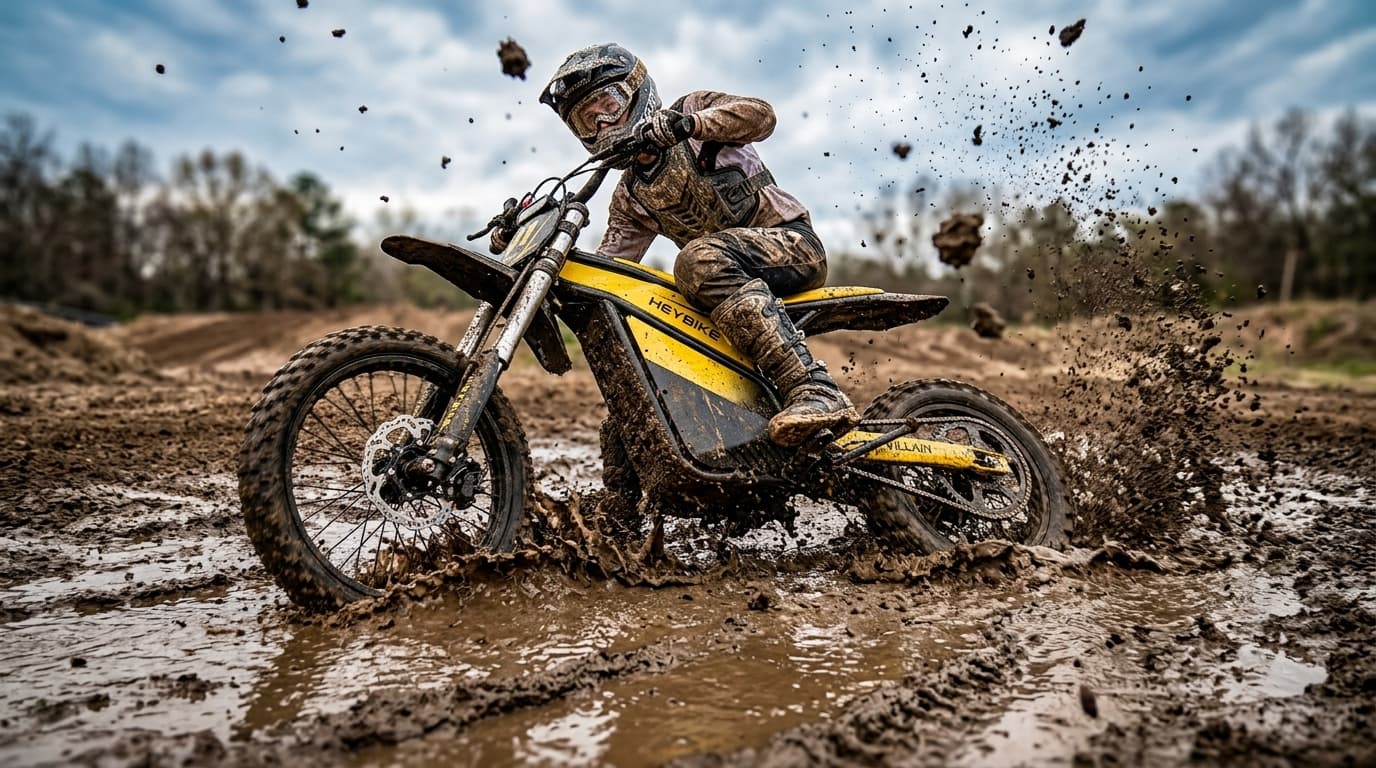
- Mud: Moderate mud is manageable, especially with the knobby tire tread. Deep mud requires throttle control and body positioning. The IPX6 waterproof rating means mud and water won't damage the electronics.
- Steep hills: This is where 190 N·m of torque separates the Villain from standard e-bikes. Short, steep hills that would stall most electric bikes are well within the Villain's capability.
- Rocky terrain and ruts: The 150mm front travel and rear nitrogen/air shock absorb impacts well, but technical rock gardens demand slower speeds and precise line choices.
How the Mid-Drive Motor Performs on Hills
The Villain's mid-drive motor is a game-changer for hill climbing. Unlike hub motors that struggle as terrain steepens, the mid-drive routes power through the drivetrain, multiplying torque at the wheel. With 190 N·m available, the Villain can climb grades that would leave most electric bikes walking.
Key hill-climbing technique:
- Build momentum before the climb. Approach with speed — starting from a dead stop at the base of a steep hill wastes energy fighting gravity.
- Shift your weight forward. Slide forward on the seat or stand with your weight over the front wheel to prevent it from lifting off the ground.
- Maintain steady throttle. Don't pulse or chop the throttle. Smooth, consistent power keeps the rear tire hooked up and prevents wheel spin.
- If you stall, commit. Stopping mid-hill is harder than keeping moving. If you lose momentum, lean forward and give it full throttle — the 4,160W motor will pull you through most situations.
On particularly steep or loose hills, the reverse function can be a lifesaver. If you stall out and need to back down, engage reverse carefully rather than trying to physically turn the bike around on a slope.
Suspension Setup Tips
The Villain's suspension package — a front hydraulic fork with 150mm travel and a rear nitrogen/air shock — is what makes extended off-road riding possible. Proper setup transforms the ride quality:
- Front fork sag: Sit on the bike in your riding gear. The fork should compress approximately 30-40% of its total travel under your weight. If it compresses more, increase preload; if less, reduce preload.
- Rear shock sag: Same principle — 30-40% sag under rider weight. The nitrogen/air shock allows fine-tuning by adjusting air pressure. More pressure for heavier riders or aggressive terrain; less for lighter riders or smoother trails.
- Rebound damping: Set rebound so the suspension returns to full extension smoothly after a bump, without bouncing or packing down over repeated hits. Too fast and the bike feels bouncy; too slow and the suspension can't recover before the next obstacle.
- Check before every ride: Suspension settings can drift over time, especially the air pressure in the rear shock. A quick sag check before heading out takes 30 seconds and prevents a bad ride.
Tire Pressure Recommendations for Different Terrain
Tire pressure has an outsized impact on the Villain's off-road performance. The right pressure changes everything — traction, comfort, handling, and puncture resistance. Here's a starting point (adjust based on your weight and conditions):
- Hard-packed dirt trails: 15-18 PSI — firm enough for responsive handling and low rolling resistance.
- Loose gravel and soft dirt: 10-14 PSI — lower pressure lets the tire conform to uneven surfaces and increases contact patch for better grip.
- Sand: 8-10 PSI — maximum floatation. The tire spreads out and rides on top of the sand instead of digging in.
- Mud: 10-12 PSI — balance between grip and preventing the rim from bottoming out on hidden rocks.
- Rocky technical terrain: 12-14 PSI — enough give to absorb impacts but firm enough to protect the rims from sharp rocks.
- Mixed terrain (general purpose): 12-15 PSI — the best all-around compromise if you don't want to adjust between sections.
Pro tip: Carry a small portable pump and tire pressure gauge in your pack. Adjusting pressure on the trail takes two minutes and can completely change how the bike handles the next section.
Using the FarDriver App to Tune Power for Trails
The FarDriver controller is one of the Villain's standout features for off-road riding. Through the app, you can adjust throttle response curves, power output, and regenerative braking — essentially reshaping how the bike delivers its 4,160W to match the terrain:
- Technical trails (rocks, roots, tight turns): Dial power down to 60-75% and soften the throttle curve. This gives you finer control at low speeds and prevents the motor from overwhelming your traction on tricky obstacles.
- Open trails and fire roads: Crank it up to 85-100%. Full power is perfectly usable on wide, fast trails where you can use the speed and the tires have room to grip.
- Hill climbing: Full power with a linear throttle response. You want predictable, proportional power delivery when the bike is pulling hard against gravity.
- Sand and loose surfaces: Moderate power (70-80%) with a gentle throttle ramp. Too much torque on loose surfaces causes the rear tire to spin and dig in instead of propelling you forward.
- Regenerative braking: Turn it up on long descents to reduce brake wear and add a bit of charge back. Turn it down or off on technical sections where you need precise speed control without the motor braking effect interfering.
Saving different profiles in the app means you can switch settings in seconds at a trailhead without fiddling with mechanical adjustments.
Range Management on Trails
Off-road riding drains the battery significantly faster than road riding. The Villain's 52V 26Ah battery delivers a real-world range of 15-25 miles, but on aggressive off-road trails expect the lower end of that range — or below it. Here's what affects trail range:
- Aggressive throttle use: Frequent hard acceleration and full-power climbs drain the battery fastest. Smooth, steady riding extends range noticeably.
- Terrain difficulty: A flat fire road at moderate speed might get you 20-25 miles. A hilly technical trail with constant elevation changes could drop you to 12-15 miles.
- Rider weight and speed: Heavier riders and higher sustained speeds increase power draw proportionally.
- Tire pressure: Under-inflated tires increase rolling resistance, which eats range. Proper inflation matters more off-road than on.
- Temperature: Cold weather reduces battery capacity. On winter rides, expect 10-20% less range than in warm conditions.
Plan rule: Always plan your ride to end with at least 20% battery remaining. Running out of charge on a trail miles from your vehicle is a long walk back with a 100+ pound bike.
Water Crossings and Mud
The Villain's IPX6 waterproof rating means the electrical system is protected against powerful water jets. This doesn't mean you should submarine it through a river, but it does mean:
- Stream crossings: Shallow streams (up to the bottom of the motor) are fine. Maintain steady speed to create a bow wave and avoid stopping in the water.
- Puddles and deep mud: No problem for the electronics. Ride through confidently and let the motor torque pull you out the other side.
- Riding in rain: Fully supported. The IPX6 rating handles heavy rain without issue.
- After water crossings: Give the brakes a few light taps to dry the rotors. Wet brakes have reduced stopping power for the first few stops.
- Post-ride cleaning: Rinse off mud and grit after wet rides. While the electronics are protected, mud buildup around the drivetrain and suspension linkages accelerates wear if left to dry and cake on.
Avoid: Deep water that could submerge the battery compartment or motor beyond the IPX6 test depth. IPX6 protects against water jets, not submersion.
Essential Off-Road Gear Checklist
Off-road riding demands more preparation than casual street riding. Pack these every time you hit the trail:
- Full-face helmet: DOT-certified. Off-road means branches, rocks, and potential falls — full-face protection is the standard.
- Goggles: Dust, mud, and debris are constant companions on trails. Goggles seal better than sunglasses.
- Riding gloves: Padded gloves reduce vibration fatigue and protect your hands in a fall.
- Over-the-ankle boots: Stiff-soled moto boots or heavy hiking boots. Ankle support prevents injuries on uneven terrain.
- Knee and elbow pads: Even on moderate trails, a tip-over can happen. Pads turn a painful bruise into a minor inconvenience.
- Portable pump and tire gauge: For adjusting tire pressure on the trail.
- Basic tool kit: Allen keys, a multi-tool, and zip ties cover most trailside fixes.
- First aid kit: Basic supplies for cuts, scrapes, and minor injuries.
- Water and snacks: Off-road riding is physically demanding. Stay fueled and hydrated.
- Phone with FarDriver app: For adjusting power settings and monitoring battery health.
Trail Etiquette and Environmental Responsibility
Off-road riding is a privilege that depends on maintaining access to trails. Follow these principles to ride responsibly:
- Stay on designated trails. Riding off-trail damages vegetation and erodes soil. Stick to established paths and OHV areas.
- Respect other trail users. Hikers, horseback riders, and other cyclists share the trail. Slow down, give right of way, and announce your presence when approaching from behind.
- Don't ride in wet conditions on sensitive trails. Muddy trails are vulnerable to damage from tire ruts that harden and create erosion channels. If the trail is soggy, wait for it to dry or find a different route.
- Pack out everything you pack in. No littering. If you see trash on the trail, grab it.
- Know the local rules. Electric dirt bikes may be restricted on some trails or in certain parks. Check regulations before you ride — it takes five minutes and protects access for everyone.
- Keep noise to a minimum. One advantage of the Villain over gas dirt bikes is the quiet motor. Don't negate that by blasting music on a speaker.
Pre-Ride and Post-Ride Checklists
Pre-Ride Checklist
- Battery charged to desired level (100% for longer rides)
- Tire pressure set for the terrain you'll encounter
- Tires inspected for cuts, embedded debris, or excessive wear
- Brakes tested — lever feel, stopping power, no rubbing
- Suspension sag checked and adjusted for your weight
- All bolts and fasteners tight (handlebars, stem, wheels, seat)
- Kill switch and throttle functioning correctly
- Chain or belt tension inspected and lubricated
- Lights and indicators working
- Safety gear on — helmet, gloves, goggles, boots, pads
Post-Ride Checklist
- Rinse off mud and grit, especially around the drivetrain and suspension
- Dry the bike before storage to prevent corrosion
- Inspect tires for new damage (cuts, punctures, embedded rocks)
- Check brake pads for wear
- Lubricate the chain or belt after washing
- Charge the battery if below 30% (avoid storing at very low charge)
- Note any unusual sounds, vibrations, or handling changes for your next ride
The Bottom Line
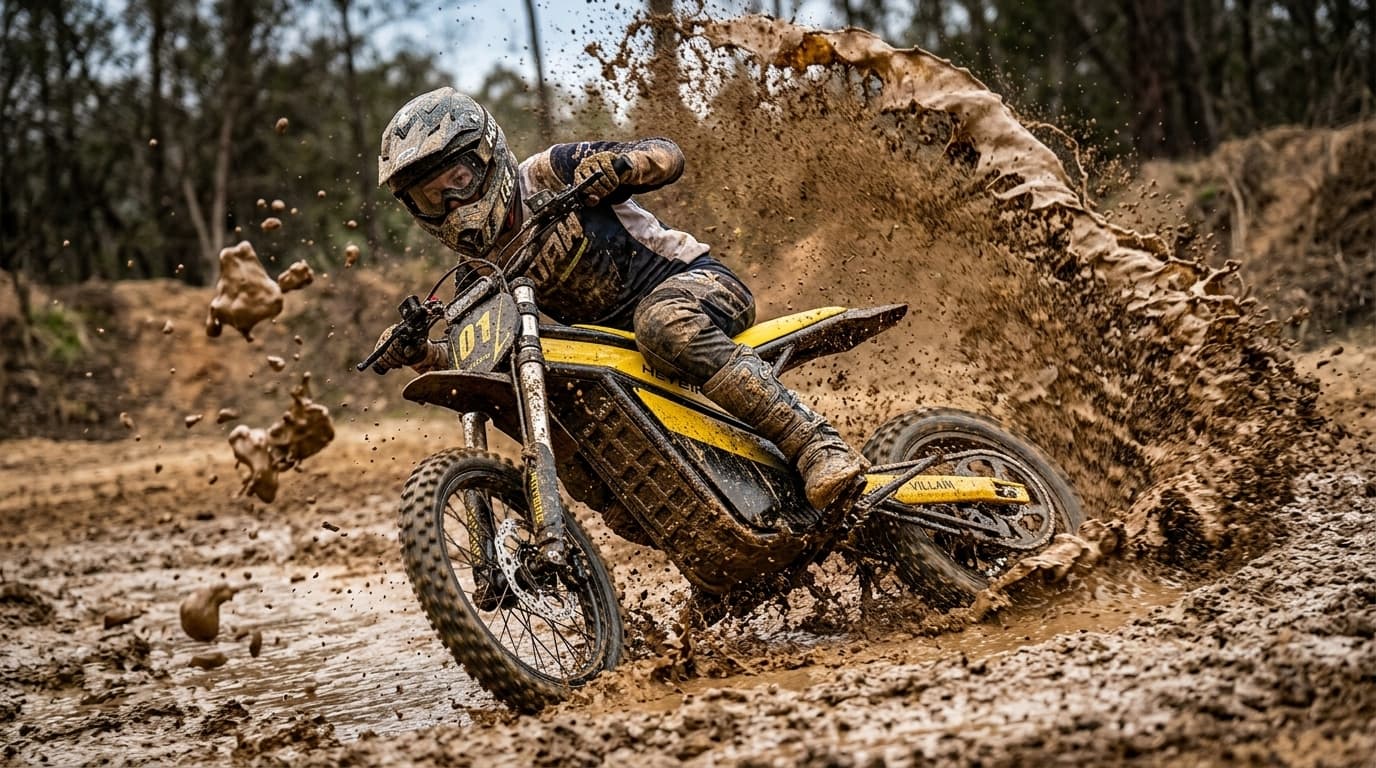
The Heybike Villain is an off-road machine first and foremost. The mid-drive motor with 190 N·m of torque, dual suspension with 150mm front travel, fat tires, IPX6 waterproofing, and app-tunable power delivery give you a dirt bike that can handle trails, hills, mud, and sand with confidence. It won't match a dedicated gas motocross bike on a MX track, but for trail riding, exploring, and weekend adventures, it delivers performance that no e-bike in its price range can touch at around $1,299.
Set it up right — proper tire pressure, suspension sag, and a FarDriver power profile matched to the terrain — and the Villain rewards you with a ride that's fast, capable, and genuinely fun on any trail you throw at it.
Related Articles
Riding Tips for Beginners
Start here if you're new to electric dirt bikes.
Read more →Full Heybike Villain Review
Complete review with performance data.
Read more →Maintenance Guide
Keep your Villain running like new after trail rides.
Read more →Best Accessories & Mods
Worthwhile upgrades for off-road riders.
Read more →