As an Amazon Associate, this site earns from qualifying purchases. Learn more
Last updated: 2026-07-22
Heybike Villain Off-Road Adventure Guide: Trail Riding for Beginners
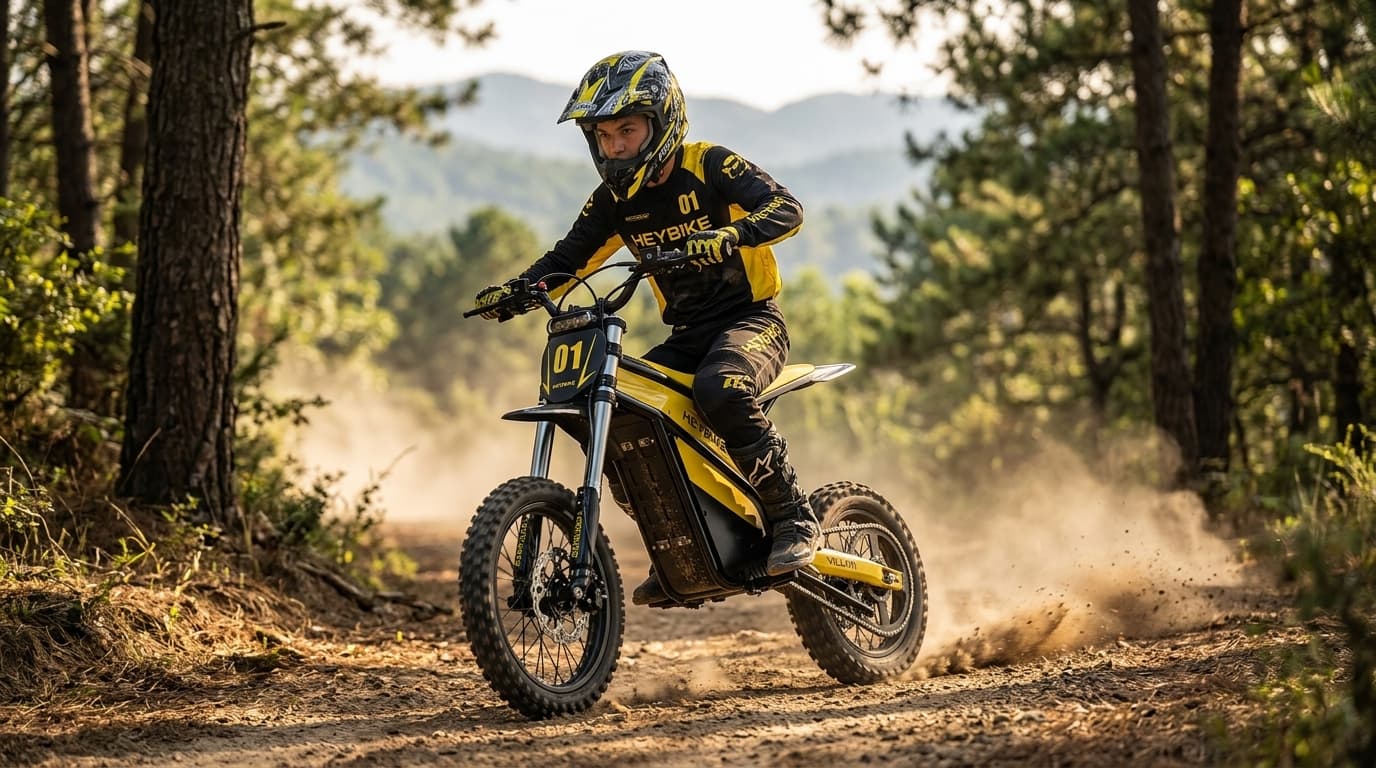
The Heybike Villain isn't meant to sit in your garage. With 4,160W of mid-drive power, 190 N·m of torque, and full suspension, this bike was built for dirt. But if you're new to off-road riding, knowing where to start — and how to set up your bike — makes the difference between an epic adventure and a frustrating afternoon. Here's your complete off-road beginner's guide.
Before You Hit the Trail
Pre-Ride Checklist
Every off-road ride starts with a 5-minute inspection:
- Tire pressure: Drop to 10-12 PSI for off-road (from the standard 15-20 PSI). Lower pressure = better traction on dirt and rocks.
- Brakes: Squeeze both levers. They should feel firm, not spongy. Check brake pad thickness.
- Battery: Charge to 100%. Off-road riding uses 2-3x more battery than pavement. Plan your ride distance accordingly.
- Suspension: Bounce the front and rear. The suspension should compress and rebound smoothly, not clunk or stick.
- Bolts: Quick-check handlebar, wheel axle, and seat bolts. Off-road vibration can loosen things.
Suspension Setup for Off-Road
The Villain's front hydraulic fork (150mm travel) and rear nitrogen/air shock are adjustable. For off-road beginners:
- Front fork: Set rebound damping to medium. Too fast = bouncy; too slow = packed down on repeated bumps.
- Rear shock: Set sag to about 30% of total travel when you're sitting on the bike. This gives the suspension room to absorb impacts in both directions.
- Start soft: Begin with softer settings and stiffen as you get comfortable. You can always adjust mid-ride.
Trail Riding Techniques
Body Position: The Foundation
Your body position is 80% of off-road riding. Get this right and everything else follows:
- Stand up: On anything rough, stand on the pegs with bent knees. Your legs become additional suspension.
- Elbows out: Keep elbows up and slightly out. This gives you leverage to control the bars through bumps.
- Eyes up: Look where you want to go, not at your front wheel. Your bike follows your eyes.
- Weight centered: Keep your weight balanced over the center of the bike. Grip with your knees.
Terrain-Specific Tips
Loose Dirt and Gravel
The most common trail surface. The Villain's fat tires handle this well, but technique matters:
- Keep a steady throttle — surging causes the rear wheel to break loose
- Steer with your body more than the bars
- Let the bike drift slightly — fighting it causes crashes
- Brake early and gently before corners
Mud
Mud is fun but demanding. The Villain's fat tires are decent in mud, but deep mud is challenging:
- Maintain momentum — stopping in mud means getting stuck
- Stand up and shift your weight back to keep traction on the rear wheel
- Avoid deep ruts created by larger vehicles
- Clean your bike thoroughly after mud rides — it's hard on components
Hills
The Villain's 190 N·m torque makes it a hill-climbing monster, but technique is still essential:
- Going up: Shift weight forward, maintain steady throttle, approach with momentum. Don't stop mid-hill.
- Going down: Shift weight back, use both brakes gently, let engine braking help. Never grab the front brake hard on a descent.
- Side hills: Keep your weight on the uphill side, lean the bike slightly, and maintain a steady speed.
Rocky Terrain
The Villain's suspension handles rocks well, but rider input matters:
- Stand up and let your arms and legs absorb impacts
- Pick your line carefully — avoid sharp rocks that can puncture tires
- Maintain enough speed to roll over obstacles, not so fast that you lose control
- Use the rear brake to control speed, front brake for emergencies
Planning Your Off-Road Adventure
Range Planning
Off-road riding uses significantly more battery than pavement. Expect:
- Aggressive trail riding: 10-15 miles of range
- Moderate trail riding: 15-20 miles of range
- Easy trails with some pavement: 20-25 miles of range
Always plan to return with at least 20% battery remaining. Walking a dead electric dirt bike back to your car is not fun.
Finding Trails
- Local OHV parks: Google "OHV parks near me" — these are designed for motorized off-road vehicles
- National forests: Many allow e-bikes on designated motorized trails
- Private land: Always get permission first. Many landowners are happy to let responsible riders use their property
- MTB trail apps: Apps like Trailforks can help find trails, but check if e-bikes are allowed
What to Bring
- Water and snacks
- Basic tool kit (multi-tool, tire levers, spare tube)
- Phone with GPS/maps downloaded offline
- First aid kit
- Battery charger if riding near your car
- Extra layers — trails can be cooler and weather changes fast
Safety on the Trail
- Never ride alone on unfamiliar trails — bring a buddy
- Tell someone where you're going and when you expect to return
- Respect other trail users — hikers, horses, and other bikes
- Slow down around blind corners
- If a trail looks beyond your skill level, it probably is — turn back
The Bottom Line
The Heybike Villain is genuinely capable off-road. It's not a full-size motocross bike, but for an electric dirt bike at its price point, it handles trails, hills, rocks, and loose terrain with confidence. Start easy, build your skills progressively, and you'll discover that some of the best riding experiences happen off the pavement.